CourseK–G1 Design Kids
- What you'll find
- Your child uses ideas from books to plan and build food trucks, bridges, and everyday products.
- Link
- See Design Kids

The class is for children ages 4 and up. Classes are taught in English by native English-speaking instructors, and worksheet difficulty matches your child's reading and writing level.
Food & Science is a family brand related to LAB.CO, and class inquiries go through its official website. When you contact Food & Science, ask which ingredients are used and whether children eat what they make.
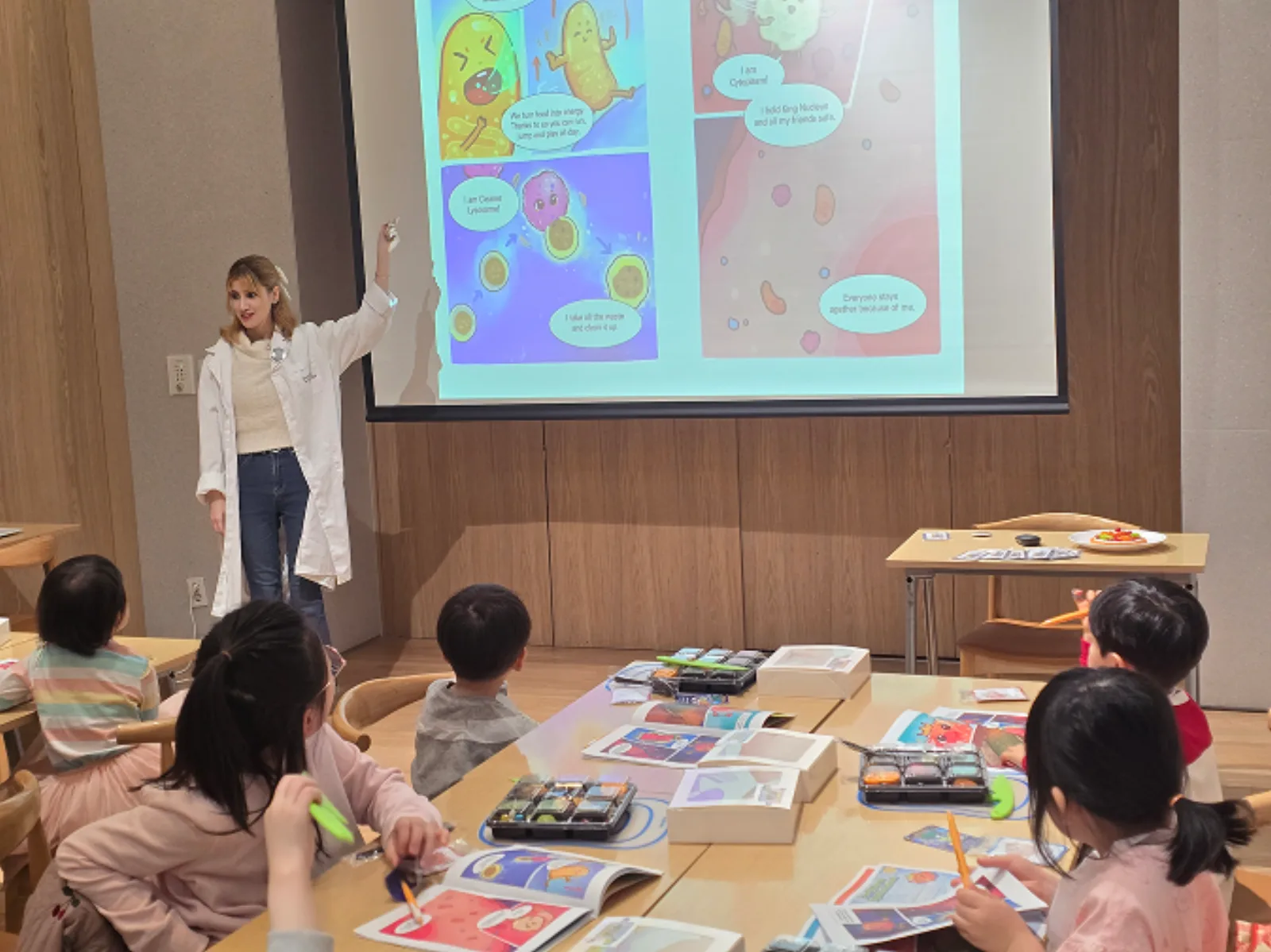
The instructor demonstrates and explains with photos, models, and real objects.
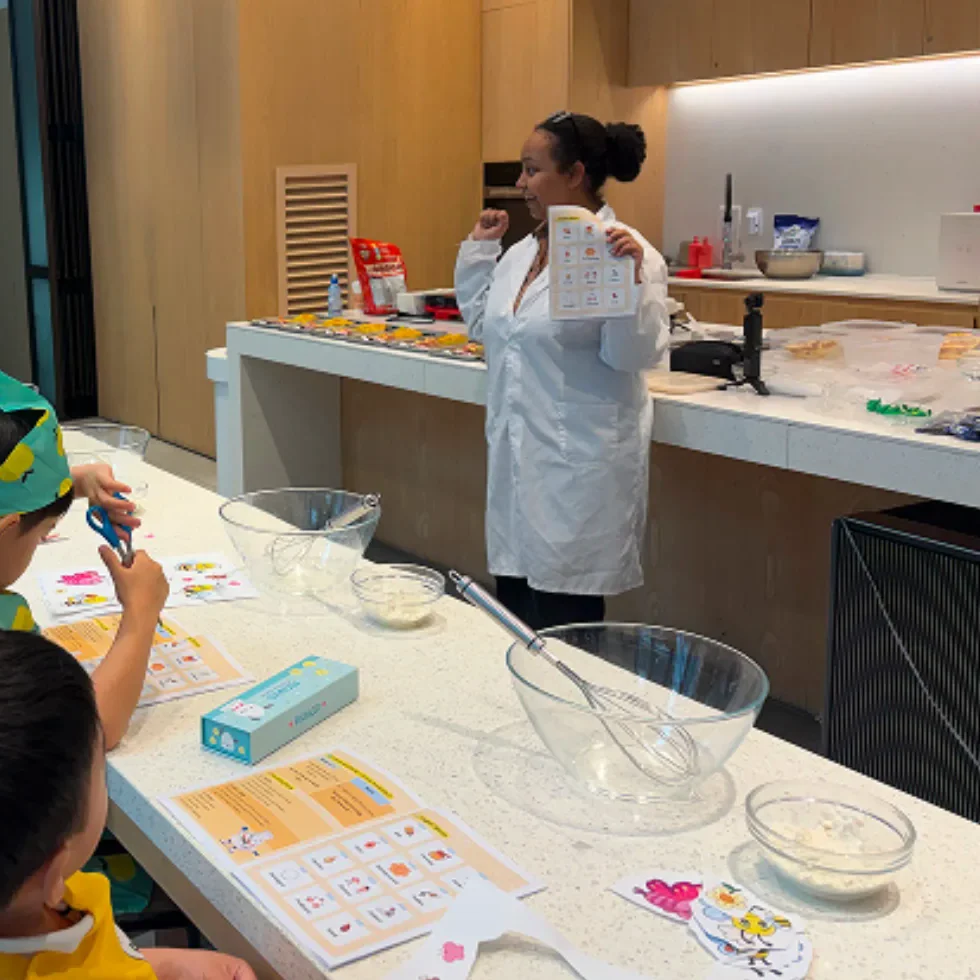
Your child hears and writes the English phrases they need again and again during activities.
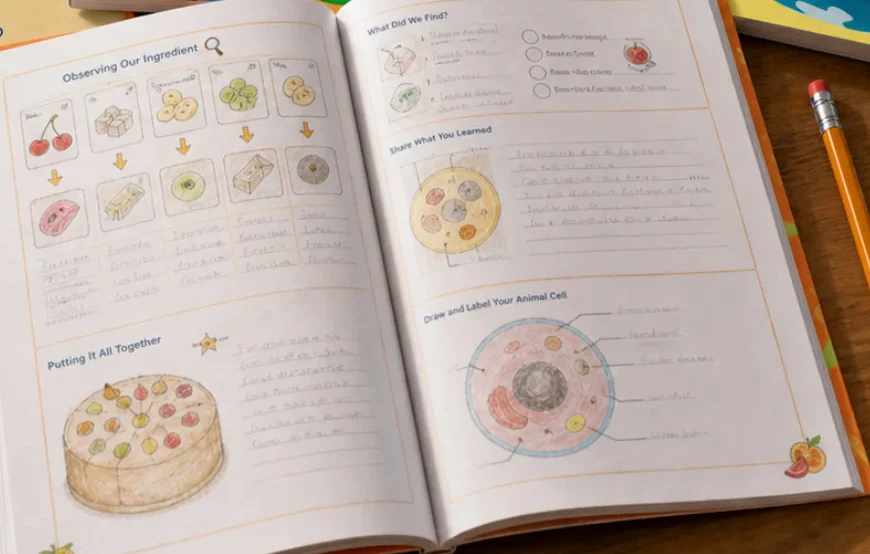
Your child draws the shapes and changes they observed and adds a short sentence.
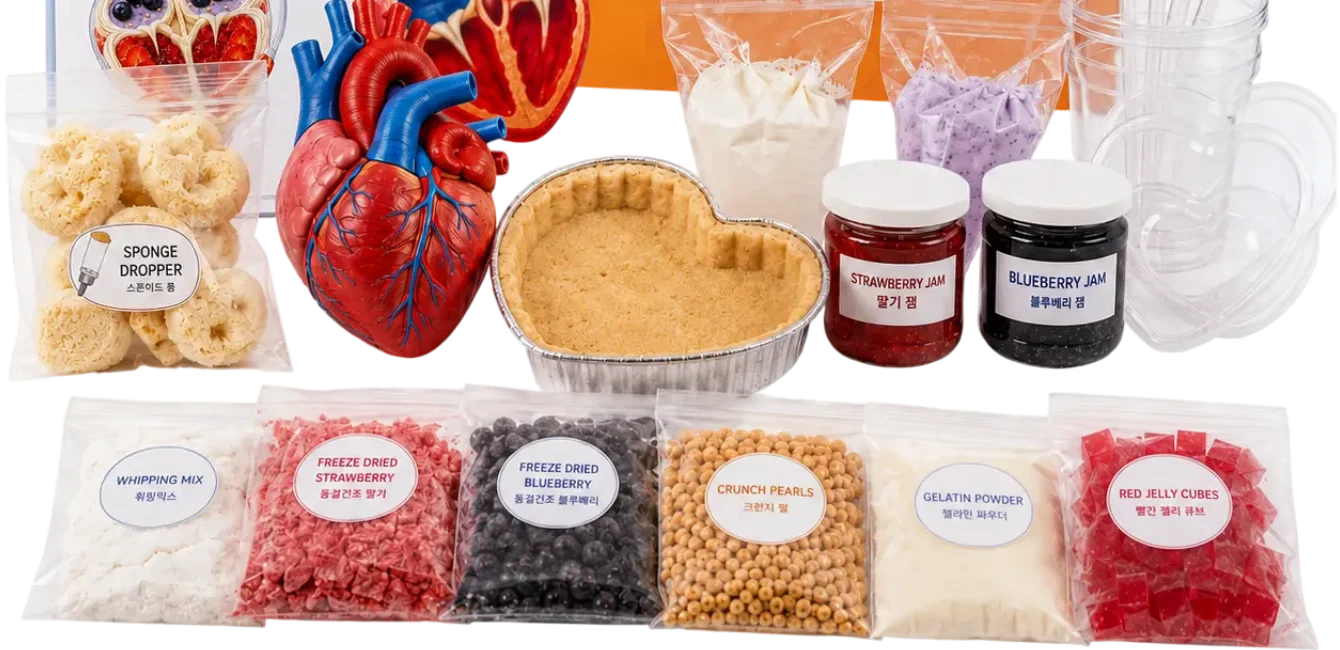
What your child learns and makes: Your child learns the heart's four chambers, its valves, and how blood flows. They build the heart's structure and explain the order blood moves through it.
What your child learns and makes: Your child learns the cell membrane, nucleus, and mitochondria. They finish a cell model and explain what each part does.
What your child learns and makes: Your child learns the cell wall, chloroplasts, and vacuole. They compare plant and animal cells to find what's the same and what's different.
What your child learns and makes: Your child makes models of red blood cells, white blood cells, and platelets, then tells a story to explain each one's job.
What your child learns and makes: Your child learns the shape of DNA, which carries genetic information. They build a model of its structure and observe and record its features.
What your child learns and makes: Your child observes a butterfly's body and life cycle and the hexagons of a honeycomb. They make a butterfly body and a hexagon pattern.
The set includes a heart model, heart-shaped tart shells, jam, and labeled ingredients.
At this step, your child: Looks at photos and models of the organ or cell for the day's topic.
At this step, your child: Learns the science concepts and English phrases needed for the build.
At this step, your child: Predicts what will happen once they build it.
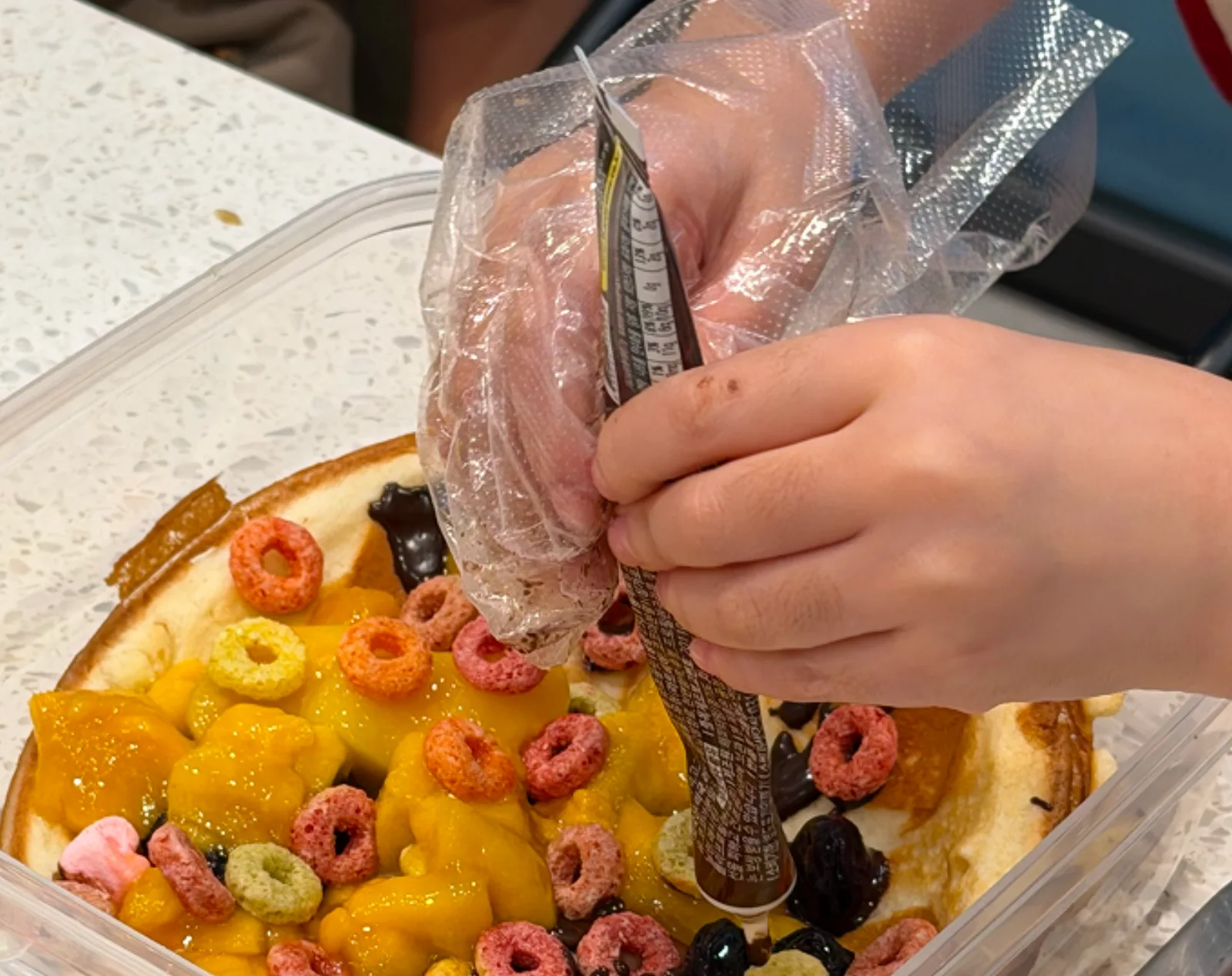
At this step, your child: Finishes a model or creation with a kit or food ingredients.
At this step, your child: Looks at the finished model's structure and compares the changes that happened while building.
At this step, your child: Explains what they learned in a drawing or presentation, using key words and sentence frames.
Says why they predicted the result.
Compares the structure and the changes and tells what they found out.
Puts what they learned into their own words.
Your child writes down the ingredient they observed and what they found out, then draws the structure. Their presentation is kept as a record too.
*Hover over or tap a card to see the details and its link.
Food & Science will recommend a class that fits once it knows your child's age and English experience. When you get in touch, you can also check the kit schedule and which tools to have ready at home.