
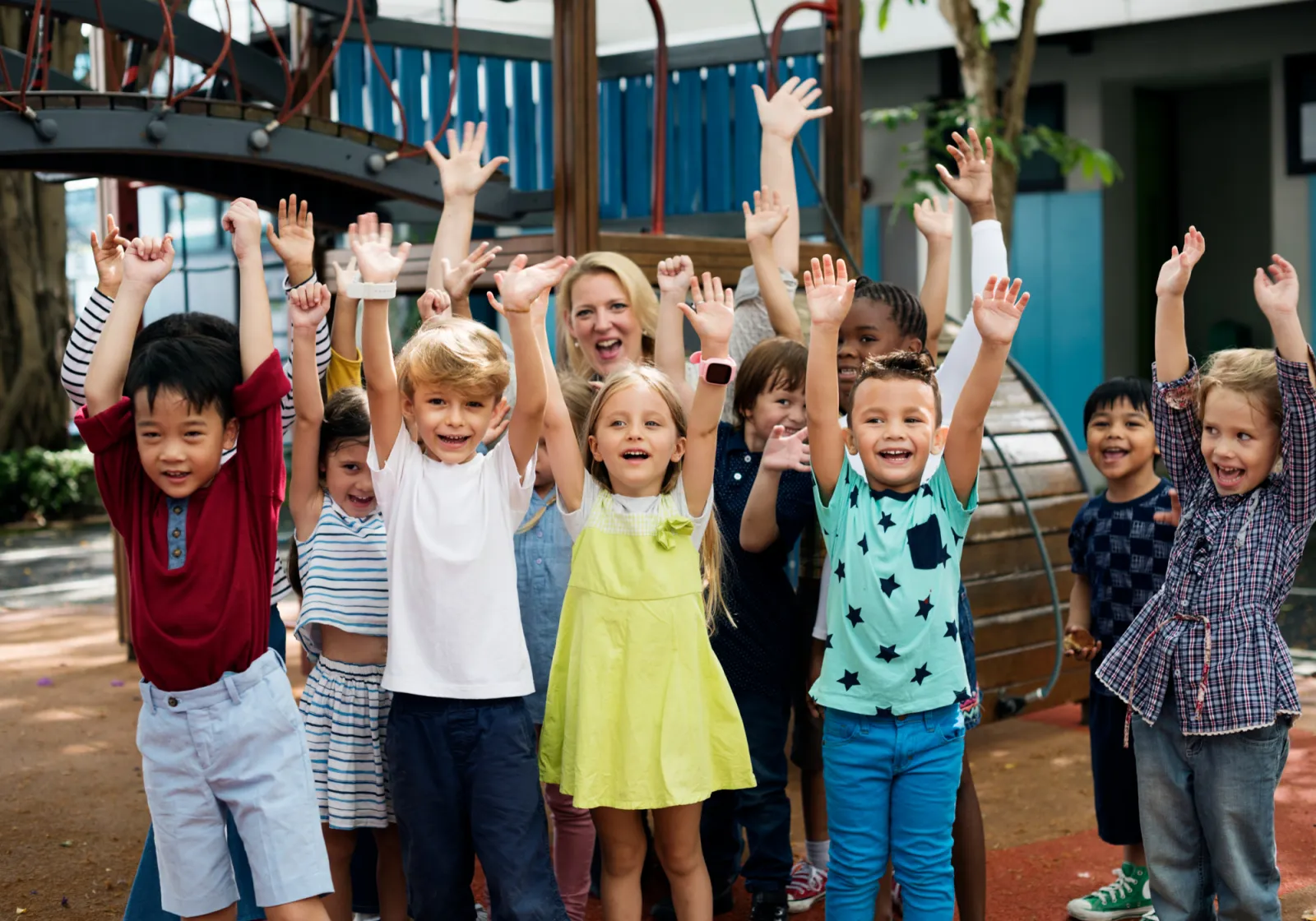
Kindergarten (K–G1)
Kindergarten classes include Math Lab, where children learn numbers and shapes with manipulatives; Write Lab, where they speak and write in English; Book Club, where they listen to English picture books; and hands-on science and design classes, plus Korean. Find the classes that fit your child's age and interests, then request a consultation.
If this sounds like your child
Pick the concern closest to what you're seeing now.
*Click to jump to that section.
- My child is just starting with numbers, and I want a solid base for elementary math.In Math Lab, your child learns numbers, shapes, patterns, and English math terms with manipulatives and picture materials.
- I want my child to share their ideas in English and write a little.In Write Lab, your child writes what they said as short English sentences and revises them with the instructor.
- I want my child to enjoy English picture books and repeat what they hear.In Book Club Early (Pre-K–K), your child listens to picture books, answers questions, and retells the story.
- I want my child to learn science by building and observing.In Food & Science, your child builds models of topics like the heart and cells and explains them with drawings and words.
- I want my child to make the things they read about in books.In Design Kids, your child reads a book, draws a design, then builds and tries out products, spaces, and structures.
- My child's Korean vocabulary is limited, and they have trouble putting feelings into words.In kindergarten Korean, your child reads literature and puts into words how the characters feel and how they feel themselves.
- I'd like advice on SCAT prep or a long-term study plan.In K–G1 SCAT Math, your child does practice drills, and in consulting, we build a long-term academic plan.
Math Lab
Math Lab: Kindergarten Math
Children who are just learning numbers or getting ready for elementary school learn elementary math concepts by handling manipulatives and looking at pictures. They start with the concepts they can understand now.
How your child learns one concept, step by step
- See and handle manipulatives to learn the concept
- Say the same concept in English math terms
- Apply it to easy problems
- Explain their thinking out loud
- Redo the problems they got wrong
Concepts your child learns in each area
Numbers and operations (algebra)
Your child learns the basics of numbers and operations and how numbers relate to each other.
Shapes and geometry
Your child tells different shapes and figures apart with manipulatives and pictures.
Probability and statistics
Your child sorts objects by a rule and shows the groups in a simple graph.
English math terms and measurement
Your child names the numbers, shapes, lengths, and weights they learned with English terms and units.
Your child shows what they understand with manipulatives and their own explanations
What counts is whether your child can tell concepts apart with manipulatives and explain their thinking in words or a drawing. When a concept is hard for them, they try it again with different manipulatives and key problems.
Write Lab
Write Lab: English Speaking and Writing
Write Lab teaches English reading, grammar, and writing together. In kindergarten, children listen to English stories, talk about their own experiences in English, then write short English sentences.
- K–G1Telling stories through language playLanguage Play & Story FoundationsKindergarten
- G2–3Writing stories from experience and imaginationCreative Writing
- G4–5Organizing information to explain a topicInformative Writing
- G6–7Essays with a claim and evidenceAcademic Writing
- G8–9Analytical writing that compares sourcesPrep AP - IB Analogical Writing
- G10–11Research papers and college application essaysCollege Prep-Advanced Writing
Your child writes down in English what they heard and said
Listen to English stories and share their own experiences
Your child listens to picture books and English stories and tells a similar experience in English.
Write what they said in words and short sentences
After learning English words and sentence frames, your child writes their idea down briefly.
Read together and revise
Your child reads their sentences out loud and fixes the awkward parts with the instructor.
Your child writes about topics they already know
Your child reads English picture books and short texts on everyday topics: family and community; jobs and rules; holidays; animals, plants, and seasons; and the five senses and weather.
Book Club
Book Club: English Picture Books
In Book Club, children read English books and share what they understood out loud and in writing. In kindergarten, children at the Early level (Pre-K–K) listen to English picture books and get comfortable with English sounds and phrases.
- Pre-K–KLearning words and phrases from picture books and storiesEarlyKindergarten
- G1–3Reading easy chapter books alone and writing responsesDeveloping
- G4–6Writing with evidence and discussing booksIndependent
- G7 and upCritiquing advanced fiction and nonfiction, and writing research papersCritical
Your child listens to English picture books and talks about them
Listen and understand the story
Your child listens to a picture book, follows the scenes and characters, and learns what the repeated English phrases mean.
Use the phrases in songs, games, and role-play
Your child says the phrases they heard in the book while singing, playing games, and acting out scenes.
Answer questions and retell the story
Your child answers questions about the book and tells the important scenes again in their own words.
We set the difficulty of books and activities by how well your child understands the story, whether they say the book's phrases themselves, and which topics they enjoy. When your child is ready to read easy chapter books alone, they move up to the G1–3 level.
Food & Science
Food & Science: Learning Science by Making
Food & Science is a science program from a family brand related to LAB.CO. Children ages 4 and up build models of science concepts, and classes are taught in English by native English-speaking instructors. Children new to English follow along with photos, models, and demonstrations.
Each class, from observing to explaining
- Observe photos and models and learn the conceptDISCOVER · LEARN
- Predict the result and say whyPREDICT
- Build with a kit and materialsCREATE
- Observe the structure and the changesOBSERVE
- Explain with drawings and a presentationEXPLAIN
Sample science topics
Heart and blood
Your child builds the heart's structure and learns the path blood takes through it and what blood cells do.
Animal and plant cells
Your child finishes cell models and finds what's the same and what's different between the two cells.
DNA
Your child builds the basic structure of DNA and observes and records its shape and features.
Butterflies and bees
Your child observes insect bodies, how insects grow, and the hexagon pattern of a honeycomb, then builds models of them.
Design Kids
Design Kids: Design That Starts with a Book
In Design Kids, children use what they learn from books to plan products, spaces, structures, and visual designs, then make them, use them, and explain them. Projects are chosen to fit your child's age and interests.
The steps your child takes to complete a project, from reading to presenting
- Read books and real examples to find what users needREAD AND EXPLORE · UNDERSTAND
- Find the math and science concepts the project needsCONNECT
- Write a plan and draw a designIMAGINE AND PLAN
- Make it, use it, and fix itDESIGN AND MAKE · USE AND IMPROVE
- Present the process and why they made their choicesWRITE AND PRESENT
Sample projects your child can make
My Own Food Truck
Your child looks into healthy food and what customers want, then makes a menu and a food truck.
Animal Museum
Your child learns animals' traits and habitats and builds an exhibit space with the visitor route in mind.
Bridges and Building Structures
Your child looks at length, weight, balance, and materials, builds a structure, and explains why it holds up.
Everyday Products
Your child notices what bothers the people who use a product, takes measurements, and makes a bag or pencil case.
What your child learns in each subject
Korean
Vocabulary, logical reasoning, and understanding the feelings in literature
Your child guesses a word's meaning from context and works out how pieces of information connect. They read literature and put the feelings it brings up into words, out loud and in writing.
See kindergarten Korean
How your child's K–G1 class plan takes shape
Tell us about your child in a consultation
Tell us which English books your child reads now and how much experience they have counting and comparing numbers.
Choose where to start
We look at your child's English speaking and writing and how well they understand numbers, shapes, and patterns, then pick their first activity and class.
Learn with manipulatives and play
Your child learns by handling, listening, and talking, and tries the hard parts again a different way.
Instructor comments tell you what your child did well in class and what they found hard.
See how parents get progress updatesK–G1 special programs
These run separately from regular classes: a SCAT prep class and academic consulting.
Kindergartners and rising first graders preparing for the SCAT
K–G1 SCAT Math
In every class, your child does practice drills with SCAT question types.
See K–G1 SCAT MathStudents in all grades, K–12, and their parents
Academic, Career & Admissions Consulting
We review your child's progress and study habits and build a one-on-one long-term academic plan around the schools they're aiming for.
See Academic, Career & Admissions Consulting
Plan your child's K–G1 classes
Tell us your child's age, what they can do now, and the topics they love, and we'll find the right class together.