LevelEarly (Pre-K–K)
- What your child learns
- Learning words and phrases from picture books and stories
- A good fit for
- A child just starting to read English picture books and storybooks
- Level details
- See K–G1 Book Club

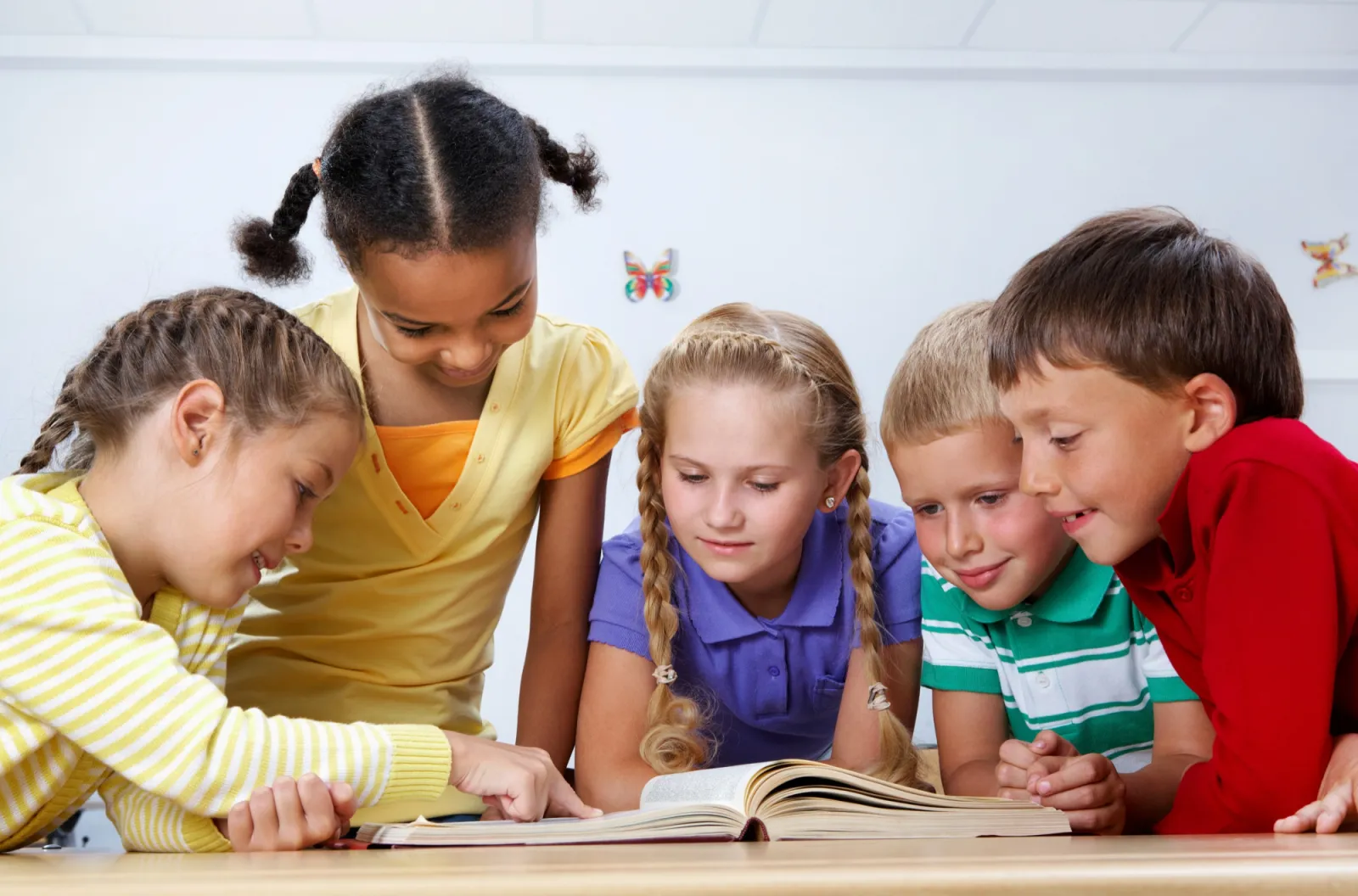
Your child reads English books, answers the instructor's questions, and talks and writes in English about the book and their own ideas.
In grades 1–3, your child reads easy chapter books alone and writes responses. In grades 4–6, they take on more complex books and back up their views with evidence in writing and discussion.
Your child's starting level, class, and books depend less on grade than on how well they read alone and express their ideas.
*Hover over or tap a card to see the details and its link.
At this step, your child: Learns key words with example sentences and finds out about the author, genre, and characters. Sometimes watches a video about the book and talks about it.
At this step, your child: Reads the book and answers the instructor's questions to confirm the main points and the order of events. Fills in anything they didn't catch, together with the instructor.
At this step, your child: Summarizes the book in a mind map or on a worksheet. Depending on their level, also looks at how characters change and what the author is trying to say.
At this step, your child: Writes about their reactions and opinions in English, using evidence from the book. The instructor corrects each child's writing individually.
Each group's reading level sets how much they read in one class and the order of the activities.
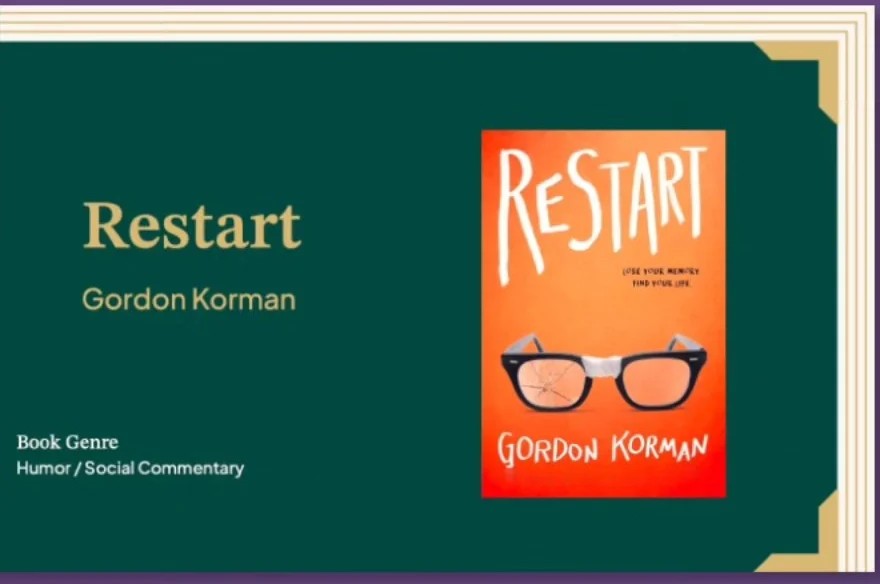
In grades 4–6, your child works through a book like Restart over several activities, from watching a TED talk to writing a book review and finishing follow-up assignments. See the full Restart lesson example
Before reading Restart, your child learns about the author, Gordon Korman, and the book's genres (Humor, Social Commentary).
Your child's book responses and worksheets go into their own portfolio, and we share class results with you. See how parents get progress updates
Tell us which English books your child is reading these days, and we'll pick a starting level together. If you'd like a precise picture of their reading level, your child can take a diagnostic assessment.