
K–G1 SCAT Math
A kindergarten math class where children build the basics of elementary math while preparing for the SCAT.
Who this class is for
This class is for kindergartners who are just starting math and for children about to start first grade.
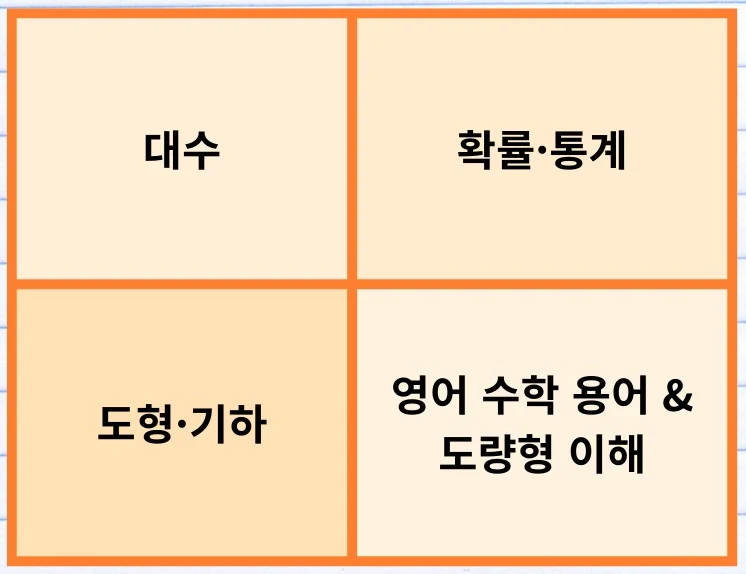
The math areas your child learns
What your child learns
- Area
Numbers and operations (algebra)
- What your child learns
- Learning the basics of numbers and operations and exploring how numbers relate to each other
- Area
Shapes and geometry
- What your child learns
- Looking at different shapes and figures and telling them apart
- Area
Probability and statistics
- What your child learns
- Looking at simple data and deciding whether something is more or less likely to happen
- Area
English math terms and units of length and weight
- What your child learns
- Learning the English words for numbers and shapes, along with units of length and weight
The elementary math units your child previews and the textbooks they use
Your child starts with the basics they can handle from the elementary school math units.
| Grade | Units |
|---|---|
| G1 | Numbers to 9, numbers to 50, numbers to 100, addition and subtraction, clocks, patterns, shapes |
| G2 | Three- and four-digit numbers, addition, subtraction, multiplication, measurement, sorting, patterns, time, graphs, shapes |
| G3 | The four operations, length, time, liquid volume, weight, fractions, decimals, data, 2D shapes, circles |
| G4 | Large numbers, patterns, multiplication, division, line graphs, adding and subtracting fractions and decimals, angles, moving shapes, triangles, quadrilaterals, polygons |
| G5 | Mixed operations, factors and multiples, simplifying fractions and common denominators, adding, subtracting, and multiplying fractions, multiplying decimals, number ranges, estimation, averages, likelihood, patterns, congruence, symmetry, perimeter, area, rectangular prisms |
| G6 | Dividing fractions and decimals, ratios and proportions, graphs, prisms, pyramids, volume, surface area, spatial reasoning, cylinders, cones, spheres |
Textbooks
Your child studies with textbooks such as Didimdol Eungyong (grades 1–6), a Korean applied math series, and McGraw-Hill Math (Grade 1–6). For children who are ahead, we sometimes recommend Choesangwi Suhak, a Korean advanced math series.

Hands-on concepts, then SCAT drills every class
Your child looks at and handles manipulatives and picture materials to learn numbers and shapes. Instructors explain with simple examples young children can follow.
We also share class results with you. See how parents get progress updates
SCAT prep classes your child can take next
The SCAT is a test students take when preparing for CTY gifted camps. The math in this class shows up in the SCAT's Quantitative (math) section. See SCAT Prep for G1–6
- Kindergarten and rising first gradersK–G1 SCAT MathThis class
- G1–3SCAT Prep for G1–6: Lower course
- G4–6SCAT Prep for G1–6: Upper course
What to settle before your child starts
This class is separate from the regular K–G1 Math Lab classes. See K–G1 Math Lab
What to settle · What we'll go over in consultation
- Starting level and pace
- The age your child can start, the first concepts they'll learn, and what it takes to move on to the next level
- Manipulatives
- How to get the manipulatives used in online classes ready at home
- Textbooks
- Which textbooks your child uses and what they cost
Plan your child's K–G1 SCAT Math classes
Tell us your child's age, what they've done with numbers so far, and any test results they already have. We'll tell you which classes are open now.