CourseG2–3 Write Lab
- What you'll find
- Your child writes English stories about real and imagined events.


Your child reads English sources, picks the information they need, and writes pieces that explain and compare.
Your child picks writing topics from social studies and science sources, like ancient civilizations, government basics, earth science, and human body systems. Then they outline before writing.
A child who retells stories well may still need practice picking information from English sources to write an explanation.
If needed, we use a diagnostic assessment to check your child's current level.
Whether your child separates what an explanation needs from what it can leave out.
Whether your child plans what to say first and which examples to add before writing.
Whether sentences and paragraphs connect smoothly.
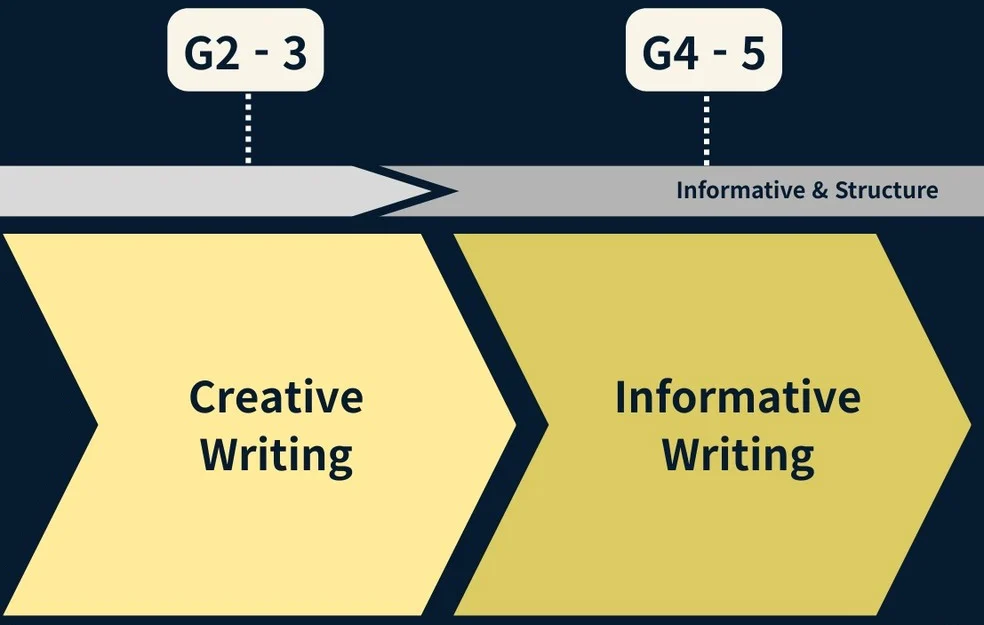
After writing stories in grades 2–3, your child moves on to writing with information from English sources.
Your child picks the information the topic needs from English sources, then builds a paragraph with the main idea first and examples after. They put the source's sentences into their own words.
Your child finds information for their explanations in English sources on social studies and science.
Subject · Topics in G4–5
Your child notes main ideas and supporting details separately. They pick the facts and examples needed to answer the question and keep what the source says apart from their own thoughts.
If your child's sentence and paragraph structure is weak, they spend more time reading model writing and editing paragraphs.
Your child learns words for sharing information through Sentence Completion and Analogies.
Your child compares Writing Models with different purposes and learns how explanatory paragraphs are built and phrased.
Your child uses new grammar in sentences and fixes paragraphs that contain mistakes in Paragraph Editing exercises.
At this step, your child: Decides who will read the piece and what it will explain or compare.
At this step, your child: Collects ideas in a mind map or notes and outlines the order to write them in.
At this step, your child: Writes an English draft that follows the outline.
At this step, your child: Revises content, structure, and sentences using their instructor's corrections.
Area · What the instructor checks
Revised pieces and assessment results go into your child's portfolio, and we share them with you. See how parents get progress updates
How it's chosen
*Hover over or tap a card to see the details and its link.
Tell us about something your child wrote in English recently or the English sources they're reading. Together, we'll decide whether G4–5 is the right level to begin.