
Level and who it's forEarly (Pre-K–K)
- Books and activities
- Children listen to English picture books and storybooks and learn their phrases through songs, games, and role-play.
- Level page
- See K–G1 Book Club

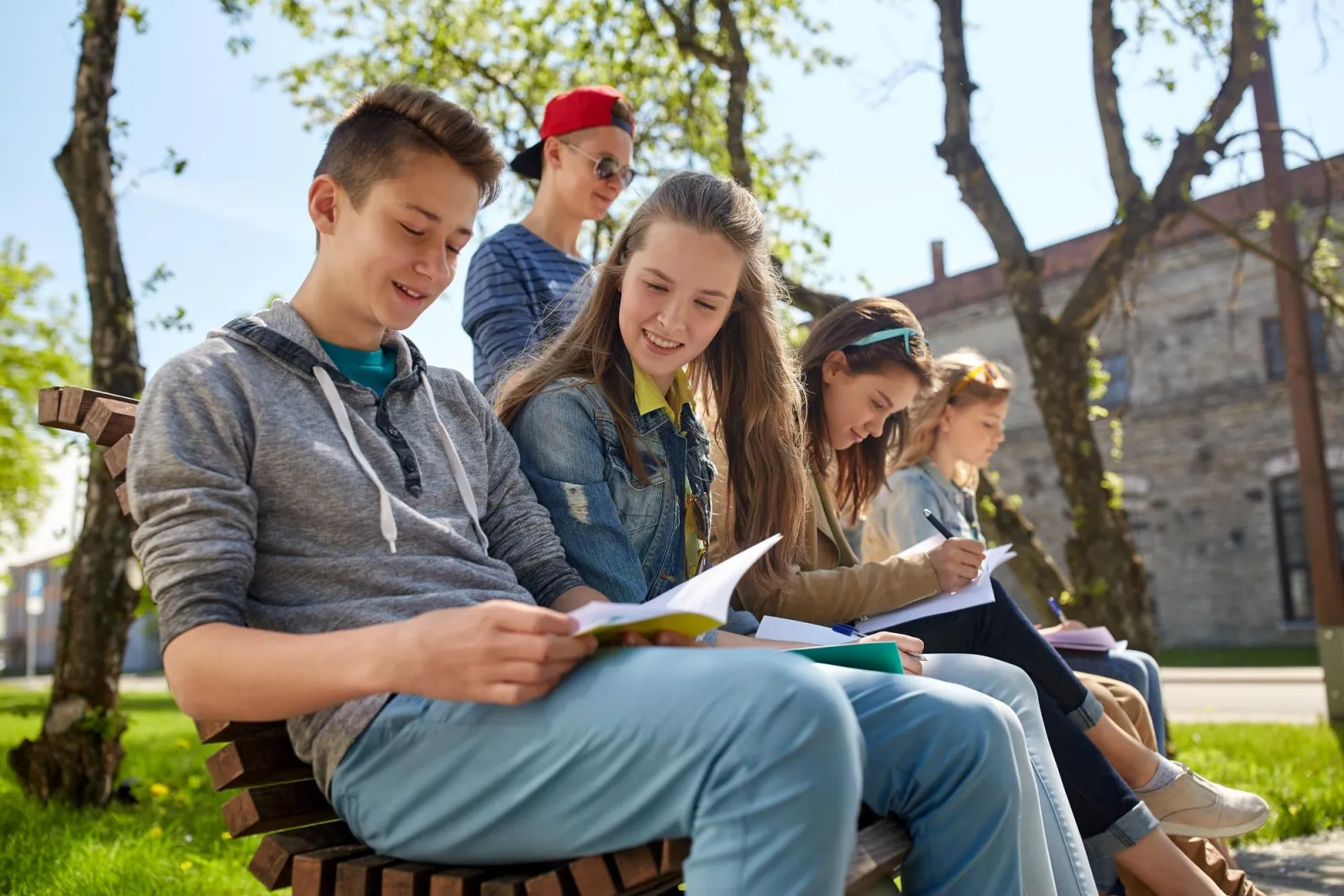
Your child reads English books chosen for their age and reading level, then talks and writes about them in English.
Children in Pre-K and kindergarten listen to picture books and talk about them. Students in grades 1–6 read chapter books and write responses and opinions. Students in Grade 7 and up critique fiction and nonfiction and write research papers.
Two children the same age can start at different levels, depending on how well they read.
*Hover over or tap a card to see the details and its link.
It's the level after Independent (G4–6).
What they learn: Your child reads English literature with real literary merit, plus nonfiction on social and philosophical questions.
What they learn: Your child looks at the theme's meaning and the work's social and cultural context from several points of view.
What they learn: Your child writes English essays and research papers backed by evidence, then presents them.
Students preparing for the John Locke Institute Essay Competition, an English essay competition, choose their own research topic, gather sources, and write a research paper. The scope of their preparation depends on their writing level.

How much students read and which activities they do depend on their Book Club level and the reading level of the class. At the Early level (Pre-K–K), classes center on listening to books and play-based activities.
At this step, your child: Learns key words, finds out about the author and characters, and watches a related TED talk.
At this step, your child: Reads the book and goes over the order of events with the instructor.
At this step, your child: Analyzes the themes, symbols, and characters' conflicts and records them in Cornell notes, worksheets, and mind maps.
At this step, your child: Writes a book review built on the main idea and the questions they still have, then gets individual written corrections from the instructor.
At the Independent level (G4–6), students read and write about one book, Gordon Korman's Restart, through nine activities. See the G4–6 Restart lesson example
Your child's book reviews, essays, research papers, and class worksheets go into their own portfolio. See how parents get progress updates
What to settle · What we'll go over in consultation
Tell us your child's age, the English books they're reading these days, and how well they talk or write about what they read. For students in Grade 7 and up, also let us know whether they want to prepare for an essay competition.